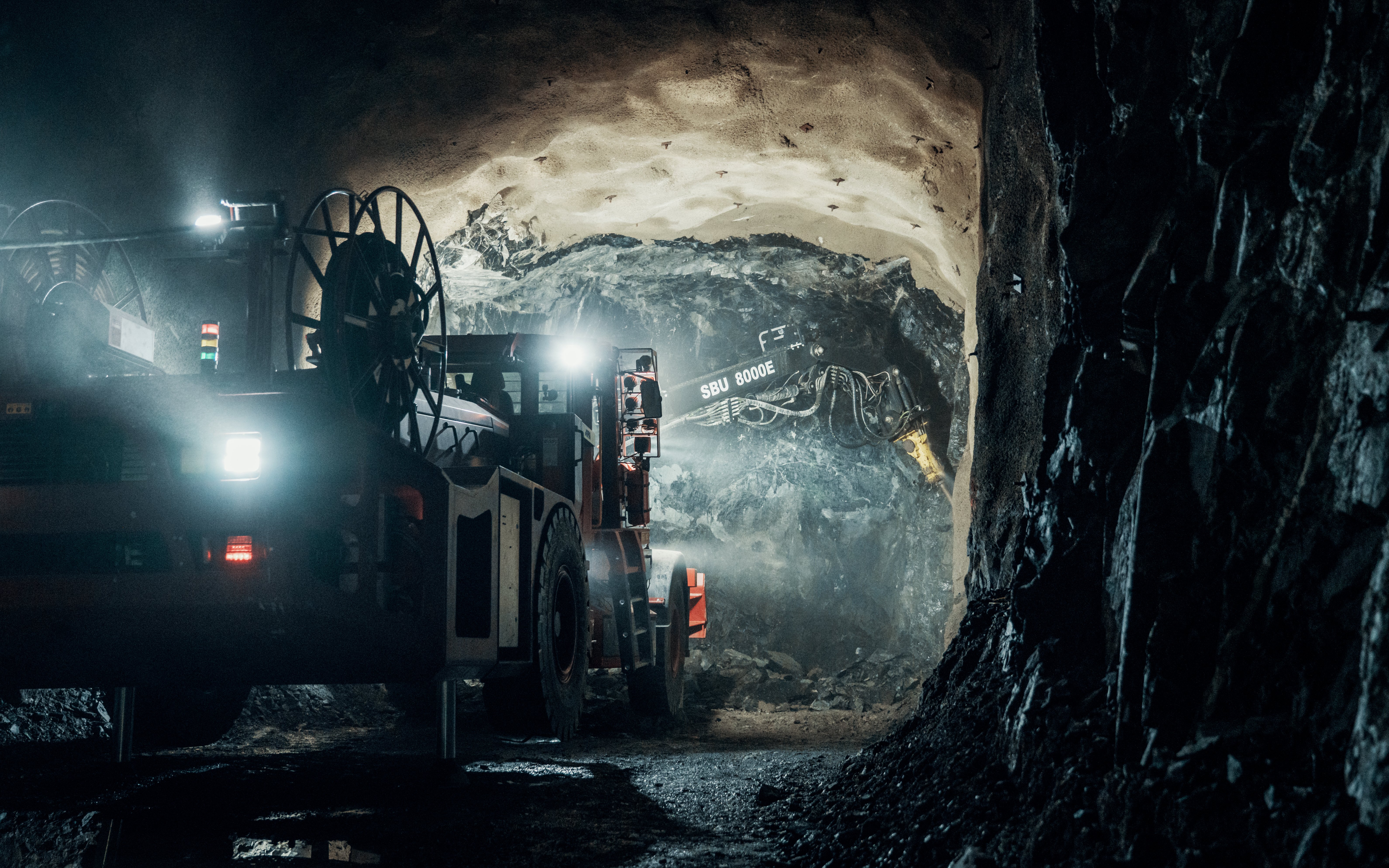
Boliden, the Swedish mining company, improved operator safety by developing an AI vision system that automatically detects foreign objects on conveyor belts carrying raw ore. By adopting a bottom-up approach, the solution was driven directly by the needs of mine operators and built through a cross-functional partnership with Norrin.
Boliden is a multinational metals, mining and smelting company headquartered in Sweden. The company is heavily invested in digitalization to optimize production, viewing AI as a core component of its toolkit. For Boliden, establishing a strong infrastructure and prioritizing high-quality data are the foundational steps, and practical AI solutions are the layers built on top.
A common challenge in AI implementation is that market pressure creates a rush to deploy the technology before organizations fully understand the operational issues they want to solve.
Boliden’s mining and smelting operations avoided this pitfall by taking a bottom-up approach, discovering use cases directly through conversations with mine operators and on-site engineers.
A solution for improving operator safety
One such use case originated from a very real safety issue identified by mine operators at one of Boliden’s facilities.
During blasting and drilling, metal components used to stabilize mine walls frequently got pulled into the raw ore stream. When the ore was carried on conveyor belts toward the crushing mills, these foreign objects would occasionally get stuck. This caused significant machinery damage and, more importantly, created severe safety hazards for the operators who had to manually clear the high-tension blockages.
The initial attempts to solve this issue relied on a laser camera. However, it proved ineffective as the water sprayed onto the ore to suppress dust caused constant false positives.
After the mine operators shut the system down, Boliden began developing a new solution based on AI vision technology. Built through a cross-functional collaboration between Boliden’s internal teams and Norrin’s software and data engineers, this new approach proved to be a major success.
The new solution significantly improved accuracy and could identify a wider category of hazards and foreign objects. But, the most important measure of success has been that the operators truly rely on and trust the new AI solution.
A fully integrated and fully scalable operational AI system
The new solution is fully integrated into Boliden’s operational infrastructure. When the AI identifies a foreign object on the conveyor belt, it stops the belt automatically. A control room operator then validates the find using a secondary camera and opens a hatch to release the object into a collection bin. The debris is later removed by other operators. All without anyone physically handling the hazardous blockages.
The solution was intentionally engineered using a modular infrastructure framework which has dramatically shortened engineering timelines for secondary deployments. The same core software blocks have now been deployed across Boliden’s other mines and smelters as well.
The key to success was cross-functional collaboration
Boliden’s team states that the key to success was cross-functional collaboration. The development team united mine operators (who possessed the domain and process knowledge), Boliden’s internal data team, and software and data engineers from Norrin. Working as an integrated team allowed for a more dynamic approach that included continuous feedback loops.
Norrin filled a vital strategic skill gap for Boliden by introducing specialized data engineering and production-grade software development expertise. Rather than functioning as detached consultants, Norrin's engineers integrated directly into the core development team.
The representative from Boliden’s team says that Norrin didn’t feel like an outside vendor, but genuine team members who stepped in, contributed immediately and helped solve Boliden’s operational challenges from day one.
Learn more about the case on our Industrial AI for business leadership webinar.
