
E-commerce competition is brutal. Customer expectations have never been higher, product catalogues keep expanding, and every click, scroll, and abandoned cart carries a cost. Retailers that are winning today are using AI to find the right customer, at the right moment, with the right offer.
AI is boosting efficiency by up to 59% across the retail sector. Retailers actively using it are seeing 5–15% annual revenue growth while cutting operational costs by up to 30%. AI-driven personalization alone can boost revenue by up to 40% (Khris Digital 2026).
This development is known as agentic commerce, where AI agents make purchasing decisions and act on behalf of the customer.
E-commerce problems have shifted from conversion and traffic to customer intent
When retailers come to us, they rarely open with "we need AI". They open with a problem they have been sitting with for a while. The most common ones are abandoned carts, ad spend that’s not converting efficiently, and profitability that’s difficult to track across channels and product lines. These are long-standing challenges and haven’t gone away.
As customers increasingly use AI-powered tools to search and shop, a new set of problems has emerged alongside them, for example, search behavior. Customers want to search in natural language and type a question the way they would say it out loud: "a warm winter jacket that fits over a suit", "running shoes for someone with flat feet", "a desk lamp that does not flicker on camera". A system that only matches keywords will return the wrong results, or nothing at all.
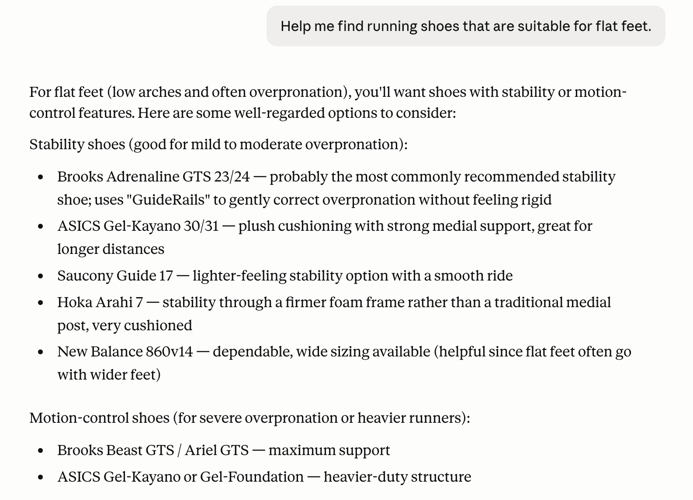
Image-based search has shifted expectations further. A customer finds a sofa they like in a photo and wants to find something similar in your catalogue. Or they upload a picture of their living room and want products that would fit the space. Spec-based search follows the same pattern in tech and electronics retail. "Does this hard drive work with my current gaming setup?" requires the system to understand both the product and the context the customer is describing.
These aren't simple keyword lookups. They require the system to understand context, intent, and product specifications together.
Structured data alone no longer drives e-commerce results
For a long time, getting retail data right meant connecting the main sources (online ads, the e-commerce platform, finance systems, CRM) and making sure they talk to each other reliably. That work is still necessary, but it doesn’t cover the full picture anymore.
The need has quickly evolved toward combining that structured data with unstructured data. Product images, customer reviews, and free-text descriptions carry enormous commercial signal, and this is where a growing share of commercially valuable information now lives. The real complexity sits in making structured and unstructured data work together fast enough to be usable in real time.
Combining customer reviews, product features, complaints, returns, and product profitability improves product mix and margins. Product issues surface earlier too, with enough time to act before they escalate.
What AI agents can do for e-commerce
The solutions we build are purpose-trained AI agents running on modern data platforms that can combine structured data and real-time data. They’re designed to connect to the client’s existing e-commerce infrastructure and deliver the retail experiences customers expect.
Most out-of-the-box retail solutions address parts of the problem. Return management tools, for example, identify which users are more likely to return products or take advantage of the return policy.
But the real power comes when you combine data from all these systems with unstructured data. Gaining a competitive edge requires defined goals and solutions built around them. One example is a retailer that combines structured sales data with unstructured inputs like customer reviews and influencer-driven trends to decide which products to stock over the next three to six months.
The question is where to start. How is your business using AI solutions right now?
If anything here raised questions about your own situation, we'd be happy to think it through with you. Send us a message.
Read about our AI solutions
Read about AI agents