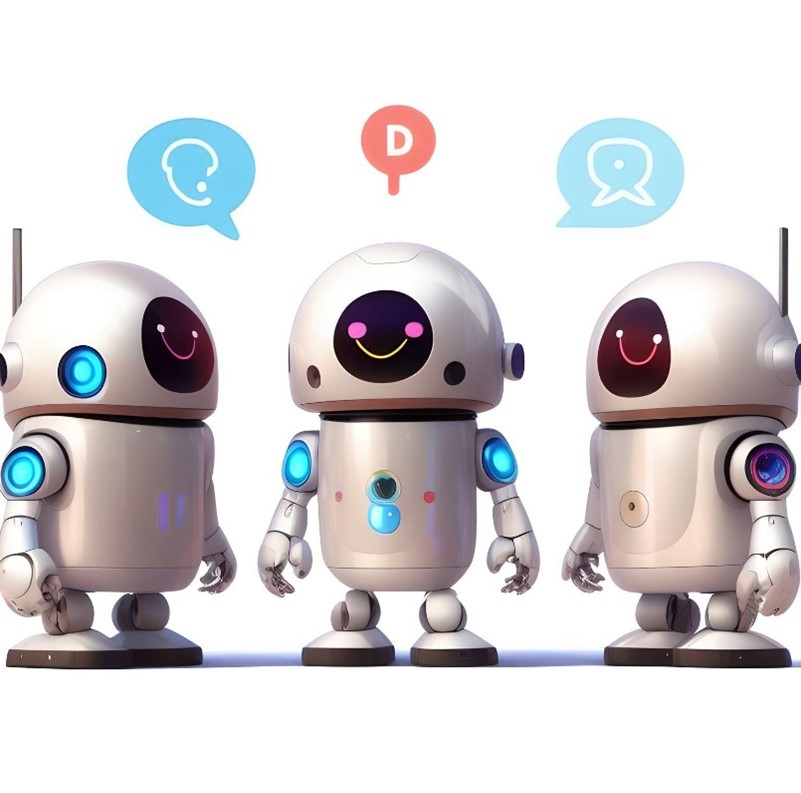
The EU AI Act – culmination of the work towards trustworthy AI in the European Union
The EU AI Act assigns obligations based on risk categories and AI value chain roles. Learn its context in the wider EU regulatory landscape and its key components.


In 2026, AI success depends on turning strategy into execution. Learn how organizations can move beyond pilots and build scalable, governed AI with real business impact.
AI is transforming business intelligence, shifting focus from static dashboards to dynamic, decision-centric analytics. Explore what this means for organizations.
Cloud1:n blogipostaus kertoo tavoista vastata liiketoiminnan tarpeisiin Microsoftin Power Platform -työkaluilla.
In 2023, Cloud1 achieved significant milestones, as the record-breaking month of September would suggest. Read more about Cloud1's CEO's review of 2023.
Cloud1 toteutti asiakaskuuntelut yhdessä Value Insights Oy:n ja Valoa Digital Oy:n kanssa.
Explore CSRD impacts and prep with Sanna Uusimäki in our blog. Learn how Norrin aids in this crucial transition with data handling.
Explore Norrin's insights on integrating Azure OpenAI into Microsoft Teams for enhanced chatbot solutions, focusing on security and efficiency.
Explore Cloud1's journey to reshaping the IT industry with a customer-first approach. Celebrate our record month in September 2023 and discover how innovation and Azure fuel our growth in a volatile market.
Seppo Kuula to become the chariman of the board at Norrin.
Vuonna 2023 Cloud1 sai arvostetun Future Workplaces -sertifikaatin, tunnustuksena erinomaisesta yrityskulttuurista ja työntekijäymmärryksestä. Cloud1:n eNPS-indeksi oli erinomainen 59.
Have you ever noticed that when you ask about data strategy, you sometimes receive a response about digitalization strategy instead? This can be confusing and frustrating, as it may not address your original question. Misunderstandings can easily happen when discussing complex concepts, even among professionals in the same field. Communication is challenging, and it's crucial to establish a shared language to ensure clarity. As data professionals, we often need to clarify terminology with business partners, even if we have experience in their industry. Organizations may use different terms to refer to common concepts, adding to the confusion. This is particularly true when it comes to data and digitalization strategies. To avoid further misunderstandings, it would be helpful to have concise descriptions of both mentioned strategies to guide the conversation in the desired direction.
Data profiling is one of my all-time favorite data development tools. A few years ago, I got to know the Pandas Profiling Python library, which does so much of the work that I previously had to do manually, mainly using SQL and Python. Data profiling can catch a wide variety of problems, but if the cause-and-effect relationship is not simple, it is not useful for a deeper investigation. The cause of the problem often has to be dug up more or less manually after profiling. So, I set out to investigate whether ML and the technologies used for its development, could somehow help me in finding the causes of quality problems.
I don't recall such hype from a single technology during my career that Open AI’s Chat GPT has made. As a regular person, I am just as into that hype as the next person. But for it to revolutionize the data industry. Well, for that we might still have a bit way to go. On that path, however, the Azure Open AI is a hefty step in the right direction. Here is a story of my first impressions trying to utilize the new service offering. I wanted to do a text analysis that would, instead of just picking up words, use some kind of intelligence to categorize the inputs. So, I started to think and search for a data set that would be relatable and would make a simple use case. Song lyrics would be perfect, right? How little did I know...